24/7 Emergency Water Extraction: What Peachtree Corners Homeowners Need to Know
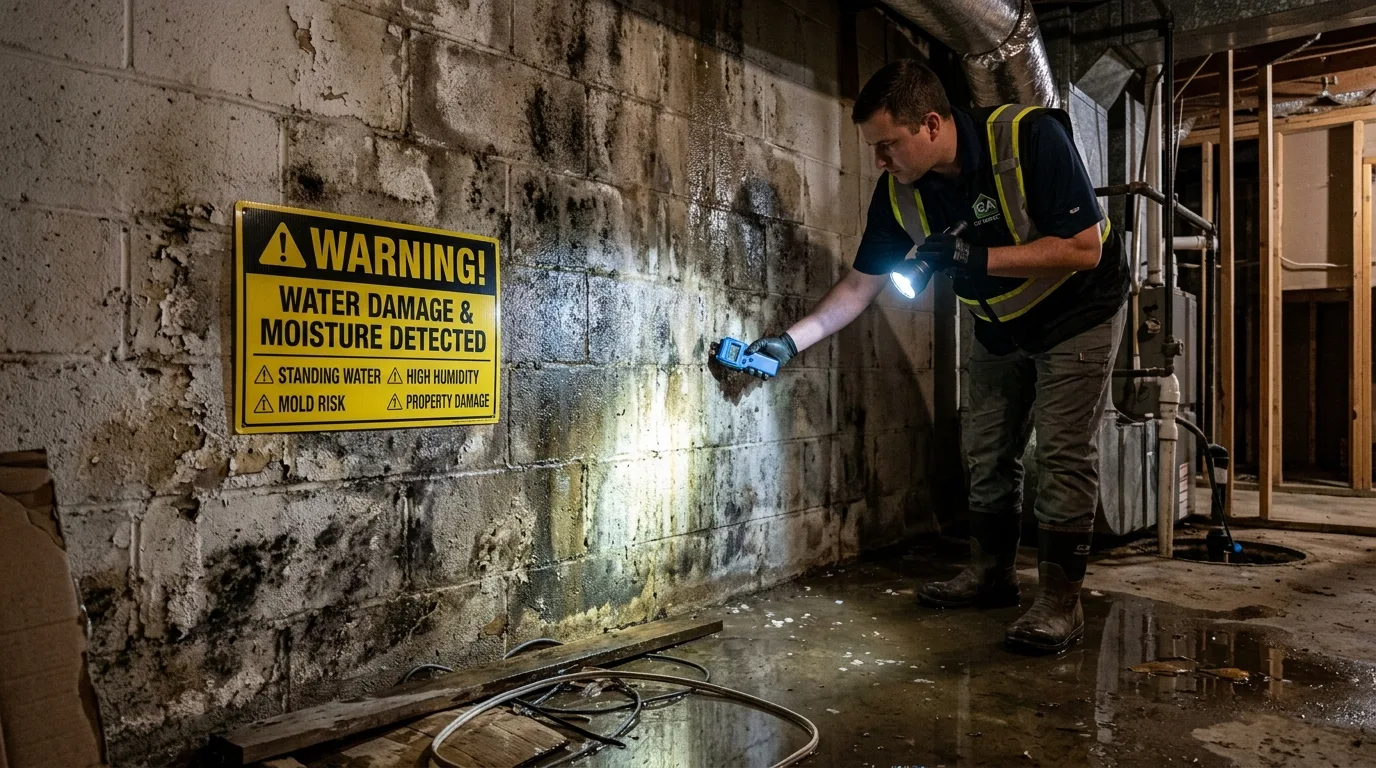
You’ve discovered standing water in your Peachtree Corners home. Your first instinct is to grab towels and mop — but that’s not enough. Professional emergency water extraction uses equipment that removes hundreds of gallons per hour from flooring, structural cavities, and building materials, then transitions immediately into commercial drying that prevents the damage from escalating into mold. In this post, we cover what emergency water extraction actually involves, how fast it can reach Gwinnett County properties, and what happens in the hours after extraction begins.
Emergency Water Extraction in Peachtree Corners — Available Now
Truck-mounted extractors, thermal imaging, IICRC-certified crew. Call (877) 698-1311 for immediate 24/7 dispatch.
Why Response Time Determines Total Damage in Peachtree Corners
In Peachtree Corners’ climate, there is a measurable relationship between the time water sits and the total restoration cost. Clean water from a burst pipe causes Category 1 damage when extraction begins within hours — the lowest-cost category at $3.50 per square foot. The same event escalates to Category 2 if water has contacted building materials for 24–48 hours, increasing cost to $5.25 per square foot. After 72 hours, Category 3 protocols apply regardless of the original water source.
Mold colonization is the other clock. With summer temperatures above 70°F and ambient humidity above 60% in Peachtree Corners for much of the year, mold can begin growing on wet drywall and framing within 24 hours of a water event. The difference between extracting within 4 hours and extracting within 48 hours can mean the difference between a water mitigation project and a combined mitigation-plus-mold-remediation project — a cost difference of $3,000–$9,000 in added remediation scope.
What Emergency Water Extraction Equipment Actually Does
Truck-mounted extractors: The most powerful extraction tool available, these units are mounted in service vans and use the vehicle’s engine to power vacuum heads capable of extracting several hundred gallons per hour. They remove both free-standing water and water absorbed into carpet, padding, and other porous floor coverings. For basement flooding events in Peachtree Corners homes — which can involve hundreds to thousands of gallons — truck-mounted units reduce extraction time from hours to minutes compared to portable units.
Submersible pumps: For standing water deeper than a few inches — common in basement flooding events in Gwinnett County during spring storm season — submersible pumps begin the extraction process before truck-mounted vacuums take over. They discharge large volumes rapidly and are particularly important when water is still actively entering from a drainage failure.
Thermal imaging cameras: Thermal cameras identify temperature differentials that reveal hidden moisture in wall cavities, under flooring, and in ceiling assemblies. Water migrates beyond the visible wet area within hours of a flooding event — thermal imaging maps the actual extent of moisture migration, which determines where drying equipment must be placed and which materials must be removed.
Moisture meters: Pin-type and non-penetrating moisture meters provide quantified readings of moisture content in building materials at specific locations. These readings, taken before extraction begins and at daily intervals during drying, form the moisture documentation record that insurance adjusters use to verify the scope of work.
The Emergency Water Extraction Process: Step by Step
Arrival and assessment (0–30 minutes): The extraction crew arrives, identifies the water source and confirms it has been stopped, and performs a rapid moisture assessment using thermal imaging to map the full extent of water migration. This determines which rooms are affected beyond what is visually obvious.
Extraction (30 minutes to 4 hours): Truck-mounted extractors remove standing water and absorbed water from flooring. Submersible pumps handle significant standing water volumes in basements. The timeline depends on the water volume and number of affected rooms — a single-room burst pipe event may be extracted in 30–60 minutes; a multi-room basement flooding event may require 2–4 hours of active extraction.
Material removal assessment: After extraction, the crew determines which materials cannot be dried in place. Saturated drywall, wet insulation, and soaked carpet and padding are typically removed — they hold moisture against structural members and prevent effective drying. Material removal is a standard part of water mitigation, not an upgrade.
Drying equipment placement: Commercial air movers and LGR dehumidifiers are positioned based on psychrometric calculations that account for the room dimensions, affected material types, and current humidity readings. This is not random equipment placement — the number and position of units are calculated to drive evaporation from wet materials while capturing evaporated moisture before it migrates to unaffected areas.
Monitoring: Daily moisture readings track drying progress at each measurement point. Equipment is adjusted as materials dry. The drying phase is closed only when all monitored locations have reached target moisture content — not when surfaces feel dry to the touch.
Professional Water Extraction in Peachtree Corners
We stage equipment via Peachtree Industrial Blvd — typically on-site in 25–40 minutes. Call (877) 698-1311.
Response Times in Peachtree Corners and Gwinnett County
Emergency water extraction teams serving Peachtree Corners typically stage in the area and can reach most Gwinnett County residential addresses within 25–40 minutes via Peachtree Industrial Boulevard. Response times extend slightly for properties in the westernmost parts of the city near the Chattahoochee River corridor due to traffic patterns on GA-141, and for events that occur during peak demand periods — winter cold snaps and spring storm events when multiple calls arrive simultaneously.
When you call for emergency water extraction, be prepared to provide: your full address, the apparent source of the water, an estimate of which rooms are affected, whether there is any sewage odor, and whether power has been cut to affected areas. This information determines the crew composition and equipment load for your specific event.
What to Do Before the Extraction Crew Arrives
Stop the water source if internal. Cut power to affected areas at the breaker panel. Document everything with video and photos before any materials are moved. Move electronics, documents, and irreplaceable items away from affected areas if they can be moved safely. Do not run household fans — without dehumidification running simultaneously, fans in a humid Gwinnett County home push humid air against wet surfaces and can slow rather than accelerate drying.
Keep children and pets away from standing water areas, particularly if there is any possibility of sewage involvement. If the flooding source is external storm water or your drains are backing up, assume Category 3 until confirmed otherwise by the extraction crew.
Frequently Asked Questions
How fast can emergency water extraction reach Peachtree Corners?
Most Peachtree Corners and Gwinnett County addresses can be reached within 25–60 minutes of dispatch depending on crew location, traffic, and time of day. During peak demand periods — winter cold snaps and spring storm events when multiple simultaneous calls are common — dispatch times may be longer. Calling immediately, as soon as water is discovered, is the best way to secure the earliest possible arrival.
Will emergency water extraction save my flooring?
It depends on the flooring type, the water category, and how quickly extraction begins. Hardwood flooring can often be saved with very rapid response — within a few hours of a clean water event. Laminate and engineered wood are less salvageable as they delaminate quickly when wet. Carpet and pad are almost always removed after significant water events because drying them in place does not eliminate the microbial content they absorb. Our crew assesses salvageability on-site based on material condition and moisture readings.
Does emergency water extraction remove all the water?
Extraction removes standing water and absorbed water from surface materials. It does not remove all moisture from building materials — that is the job of structural drying. After extraction, the building assembly (walls, subfloor, framing) will still contain elevated moisture that requires days of commercial drying equipment to resolve. Extraction starts the process; structural drying completes it.
Need Emergency Water Extraction in Peachtree Corners?
Call (877) 698-1311 anytime — 24/7 emergency response, IICRC certified, all insurance accepted, Gwinnett County wide.
Related: