Burst Pipes in Winter: Peachtree Corners Risk Guide
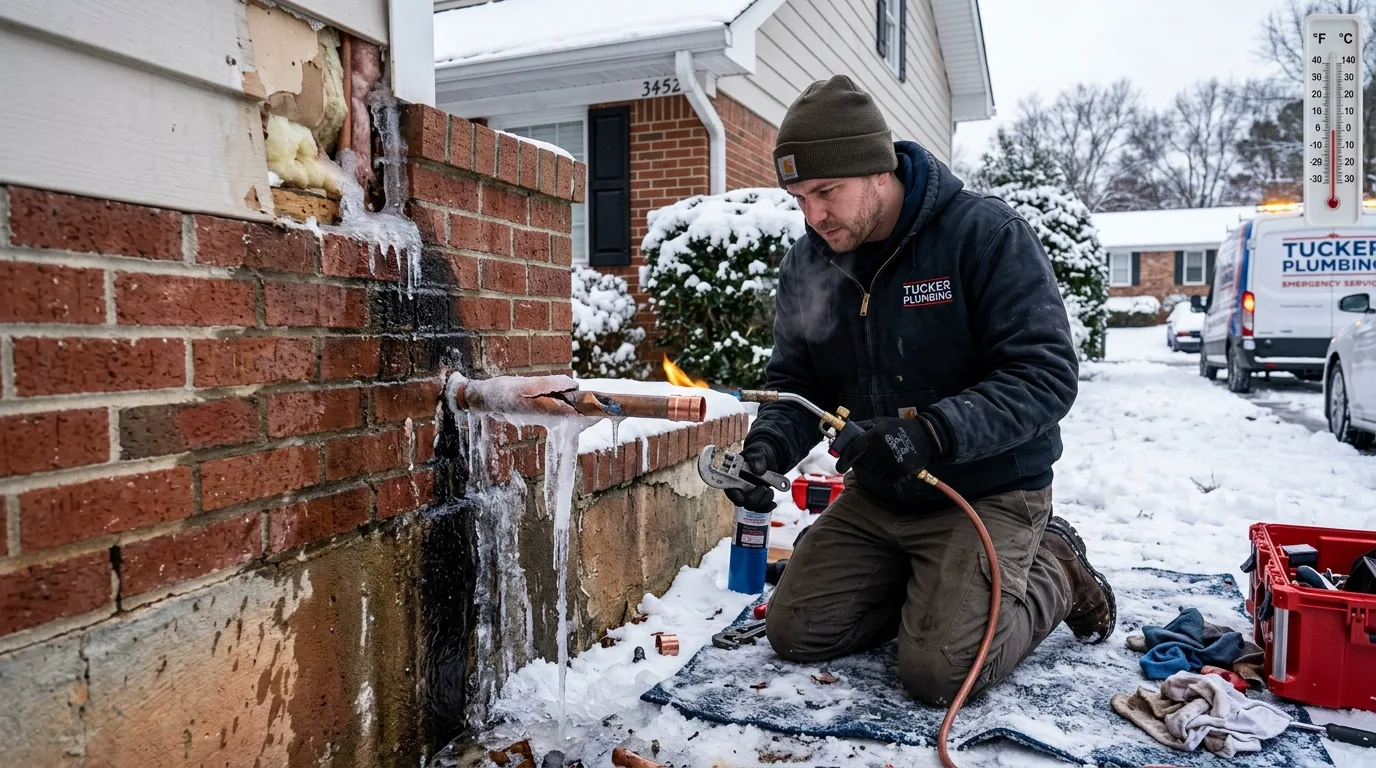
Every December through February, emergency water extraction calls spike across Peachtree Corners as freeze-thaw cycles push Georgia’s aging pipe infrastructure past its limits. In this post, we cover why Peachtree Corners homes are particularly vulnerable, what happens inside pipes when temperatures drop, and what to do the moment a pipe bursts in your home.
Burst Pipe Emergency in Peachtree Corners?
Call (877) 698-1311 for 24/7 emergency water extraction — we respond across Gwinnett County in 60 minutes.
Why Burst Pipes Are a Bigger Risk in Peachtree Corners, GA
Most people associate burst pipes with the northern states, where frozen pipes are a regular winter problem. But Peachtree Corners, GA presents a specific and underappreciated risk: the freeze-thaw cycle. During cold snaps, temperatures in Gwinnett County can drop into the low 20s — cold enough to freeze water in uninsulated pipe segments. When temperatures rebound within 24–48 hours, as they typically do in Georgia, the frozen sections rupture and release water into wall cavities, floor assemblies, and finished basements.
The housing stock in neighborhoods like Peachtree Station and River Station amplifies this risk significantly. Homes built throughout the 1970s to 1990s in this corridor often have galvanized steel supply lines — a pipe type that corrodes from the inside out over decades. These pipes develop pinhole weaknesses over time that become full failures during freeze-thaw stress. A pipe that would survive a cold snap in 2005 may not survive the same temperatures in 2026 if significant internal corrosion has occurred. Water mitigation calls from these neighborhoods increase sharply during cold snaps precisely because of this aging pipe population.
Types of Pipes Most at Risk for Winter Bursts
Galvanized steel pipes: Found throughout the Peachtree Corners housing stock built before 1990, galvanized pipes corrode from the inside over time. Internal rust deposits narrow the pipe’s interior diameter and create stress concentration points that fail under freeze-expansion pressure.
Copper pipes in uninsulated exterior walls: Copper is a good pipe material but conducts cold extremely well. Segments running through exterior walls without insulation — common in ranch-style homes throughout Gwinnett County — are the first to freeze during cold snaps.
CPVC supply lines: Introduced in newer construction, CPVC is more susceptible to cracking under freeze-thaw cycling than copper or PEX, particularly in fittings and elbows. Homes built in the 1990s and 2000s in areas like Suwanee and Amberfield transitioned to CPVC, which carries its own winter vulnerability.
Pipes in crawl spaces: Crawl space plumbing is the highest-risk category in Peachtree Corners. Exposed to outdoor air temperatures with limited insulation, these pipes freeze during cold snaps and are often the last to be discovered when they burst.
Outdoor hose bibs and irrigation lines: Hose bibbs and irrigation manifolds left unsheltered are the most commonly burst pipes during Georgia winters — and one of the most expensive surprises since irrigation line failures can release water undetected for hours.
How the Freeze-Thaw Process Damages Pipes
The physics of pipe failure during a Georgia winter are different from a northern state’s sustained freeze. When outdoor temperatures drop below 28°F — the threshold at which pipes in uninsulated spaces typically begin to freeze — water inside the pipe converts to ice and expands approximately 9% in volume. In a sealed pipe section, this expansion creates enormous internal pressure: up to 2,000 PSI in a confined section. Most residential pipes are rated to 60–80 PSI working pressure.
When temperatures rebound and the ice begins to melt from both ends of the frozen section, the internal pressure finds the weakest point — a corrosion pit, a fitting joint, a prior repair — and ruptures. In Georgia’s climate, this rebound often happens within 12–24 hours of the initial freeze, meaning water can start flowing from the rupture before the homeowner has even noticed the pipes froze. Structural drying after a burst pipe event must address not just the visible water but the water that migrated into wall cavities and floor assemblies during the hours before discovery.
Water Damage from a Burst Pipe in Peachtree Corners?
Our IICRC-certified team provides emergency extraction and structural drying across Gwinnett County — call (877) 698-1311 any time.
What Affects the Cost of Burst Pipe Water Damage in Peachtree Corners
Water damage from burst pipes in Peachtree Corners typically ranges from $1,361 to $6,270 for residential restoration projects, with most Gwinnett County homes falling around $3,814 depending on scope and timing. The earlier the event is discovered and responded to, the lower the total cost. A pipe that bursts while someone is home and is stopped within an hour typically causes significantly less damage than a pipe that bursts on a Friday evening and isn’t discovered until Sunday.
The per-square-foot cost is approximately $3.50 for Category 1 clean water from a supply line, which is the most common burst pipe scenario. If the water event has lasted more than 24 hours or has contacted sewage-adjacent areas, the category can escalate. Emergency extraction runs $1,000–$3,500 and structural drying adds $2,000–$5,000. Homes in Peachtree Corners with finished basements in the older neighborhoods off Holcomb Bridge Road typically face costs toward the higher end of the range because of the higher material density per square foot.
Frequently Asked Questions
How do I know if a pipe has burst in my Peachtree Corners home?
The most common indicators are: a sudden loss of water pressure, the sound of running water when no fixtures are on, visible water staining on ceilings or walls, unexpectedly high water meter readings, and wet spots on floors or drywall. In a crawl space burst, you may notice unusual odors, increased indoor humidity, or soft flooring before you see any visible water. If you suspect a burst pipe, shut off the main water supply immediately and call for emergency water extraction — every minute of flow increases the scope of damage and the cost of restoration.
What should I do immediately when a pipe bursts in Peachtree Corners?
Turn off the main water supply valve immediately — know its location before an emergency, as it is typically at the meter near the street or at the main shutoff inside the home. Turn off the water heater to prevent it from firing without water supply. Open faucets to relieve pressure and drain remaining water from pipes. Move valuables and electronics away from wet areas. Call for emergency water extraction, then contact your insurance company to initiate a claim. Do not use electrical fixtures in rooms with standing water.
Does homeowners insurance cover burst pipe water damage in Gwinnett County?
Most standard homeowners’ insurance policies in Gwinnett County cover sudden and accidental water damage from burst pipes. The key word is “sudden” — gradual leaks that a homeowner should have identified and repaired are typically not covered. Burst pipes during freeze events usually qualify as sudden and accidental. Document everything with photos before cleanup begins and contact your insurer promptly. We provide moisture mapping, photo logs, and scoped estimates from the first visit to support your claim.
Protect Your Peachtree Corners Home This Winter
Call (877) 698-1311 for 24/7 burst pipe water extraction and structural drying. IICRC certified, all insurance carriers accepted.
Related: