Mold After Water Damage: Why Peachtree Corners Homes Need Fast Drying
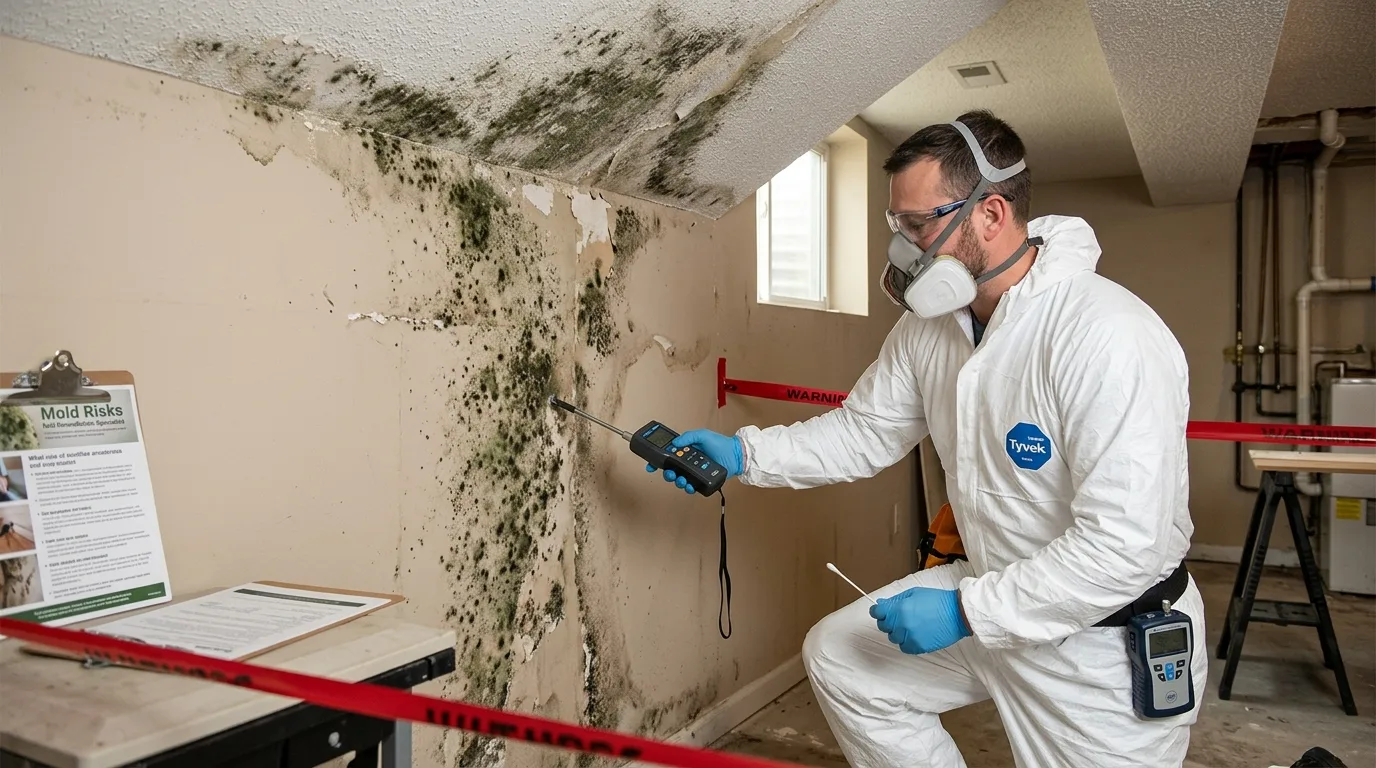
Mold after a water event isn’t inevitable — but in Peachtree Corners, the window to prevent it is significantly shorter than most homeowners realize. With summer temperatures above 70°F and ambient humidity regularly exceeding 75%, the conditions that allow mold to colonize wet building materials are present for much of the year. In this post, we cover exactly how fast mold develops after water damage in Georgia’s climate, what professional structural drying accomplishes that household fans cannot, and what to do if mold has already appeared in your Peachtree Corners home.
Mold Risk After Water Damage in Peachtree Corners?
Professional structural drying within 24–48 hours is your most effective mold prevention. Call (877) 698-1311 for 24/7 response.
Why Peachtree Corners Homes Are at High Mold Risk After Water Events
When water damage occurs in Peachtree Corners, the clock starts immediately. Mold requires four things to colonize a surface: organic material (drywall paper, wood framing, insulation), moisture, temperatures above approximately 40°F, and time. Of these four, temperature and organic material are essentially constants in a Peachtree Corners home — meaning the only variables a homeowner can affect are moisture and time.
What makes the Chattahoochee River corridor particularly challenging is the ambient humidity that persists year-round. Even when outdoor temperatures cool in fall and winter, Gwinnett County maintains relative humidity above 50% for most of the year, and above 65% from late spring through early fall. When this ambient moisture combines with wet building materials from a water damage event, mold growth accelerates faster than in a drier climate. A wet drywall section that might resist mold colonization for 48–72 hours in a low-humidity climate may begin showing growth within 24 hours in a Peachtree Corners summer.
The 24-48 Hour Mold Window in Georgia’s Climate
The IICRC and EPA both cite 24–48 hours as the window within which mold growth begins on wet building materials. This guideline was developed based on laboratory conditions at standard room temperature and 65% relative humidity — conditions that are routinely exceeded in Peachtree Corners from May through October.
At the temperatures and humidity levels common to Peachtree Corners summers, several mold species can begin visible colonization within 24 hours on the right substrate. Drywall paper is the highest-risk material because it provides both cellulose (food) and is easily wetted throughout its thickness. Insulation is high-risk because it retains moisture while providing enough organic material for mold growth. Wood framing is lower-risk initially but becomes colonized relatively quickly once continuously wet for more than 48 hours.
The homeowner outcome: if professional water extraction and structural drying do not begin within 24 hours of a water event in a Peachtree Corners home during warm months, the project scope almost certainly includes mold remediation in addition to water damage restoration.
What Professional Structural Drying Accomplishes That Fans Cannot
One of the most common mistakes Peachtree Corners homeowners make after a water event is placing household fans in the affected rooms and concluding that drying is in progress. Household fans move air — they do not remove moisture from the air. In Peachtree Corners’ humid climate, running household fans without dehumidification can actually slow drying by circulating humid air against wet surfaces rather than driving evaporation.
Dehumidification is the key variable. Commercial LGR (low-grain refrigerant) dehumidifiers used in professional water damage restoration operate at far higher capacity than consumer units — extracting 25–30 gallons of water per day from the air in the affected space, versus 1–3 gallons per day for a consumer dehumidifier. This extraction capacity is what drops the ambient relative humidity in the drying chamber to levels where evaporation from wet building materials can actually proceed.
Commercial air movers work in combination with dehumidifiers: they create high-velocity airflow across wet surfaces, accelerating evaporation. The evaporated moisture enters the air and is immediately captured by the running dehumidifiers before it can move to adjacent materials. This system — calculated equipment placement based on psychrometric calculations specific to the space volume and moisture load — is what IICRC structural drying means. It cannot be replicated with household equipment.
Prevent Mold in Your Peachtree Corners Home After Water Damage
Professional structural drying to IICRC S500 standards — 24/7 emergency response across Gwinnett County. Call (877) 698-1311.
What Mold Looks Like After Water Damage in Georgia Homes
Mold growth following water damage in Peachtree Corners homes most commonly appears as:
- Black, green, or gray fuzzy growth on drywall surfaces, typically near the bottom of walls where water absorbed and the paper face stayed wet
- White or gray powdery growth on wood framing members in crawl spaces or attics — often mold on the framing face before it penetrates deeper
- Tan or brown staining accompanied by a musty odor on insulation batts — often visible when insulation is removed during a restoration project
- Dark staining along floor joist faces in crawl spaces — typically visible after insulation removal and indicating mold has colonized the lower surface of the subfloor assembly
Not all staining is mold — some discoloration after water events is mineral deposits or dye migration. A trained IICRC mold inspector can identify mold visually and by smell with high confidence, and surface sampling can confirm species identification when it matters for insurance claims or health concerns.
Mold Remediation When Prevention Wasn’t Possible
If mold has developed in your Peachtree Corners home following a water event, IICRC S520-certified mold remediation is required. Remediation involves: containing the affected area with poly barriers and negative air pressure, removing all porous materials with visible mold growth, HEPA vacuuming of the space, antimicrobial treatment of non-porous surfaces, and air quality testing upon completion. The remediated area is then dried and rebuilt.
Mold remediation does not eliminate all mold spores from a structure — mold spores are everywhere in outdoor and indoor air at low levels. The goal is to reduce the indoor spore count to normal ambient levels and remove the conditions (wet materials) that allowed colonization.
Frequently Asked Questions
How long does mold remediation take after water damage in Peachtree Corners?
Most mold remediation projects that follow water damage events in Peachtree Corners take 1–5 days for the remediation phase, depending on the scope of growth. If the water damage event was caught within 48 hours and professional structural drying was initiated promptly, mold remediation may not be required — water mitigation alone will be sufficient. The longer water sat before professional drying began, the more likely remediation is needed.
Does homeowners’ insurance cover mold remediation in Gwinnett County?
Most Georgia homeowners’ policies cover mold remediation when it results directly from a covered water damage event that was addressed promptly. Mold remediation required because a homeowner delayed response to a known water event — or mold discovered separately from any specific event — is typically not covered. Maintaining documentation from a prompt professional response is your protection for coverage claims.
Can I remove mold myself in a Peachtree Corners home?
The EPA guidelines for DIY mold cleanup apply only to affected areas under 10 square feet on non-porous surfaces. Anything larger, anything on porous materials (drywall, insulation, wood), or anything connected to an HVAC system should be handled by an IICRC-certified remediation professional with proper containment and PPE. Disturbing mold without containment spreads spores to unaffected areas, potentially expanding the scope significantly.
Mold After Water Damage? Act Before It Spreads
IICRC-certified mold remediation in Peachtree Corners — call (877) 698-1311. Free assessment, all insurance carriers accepted.
Related: