What to Do Immediately After a Flood in Peachtree Corners, GA
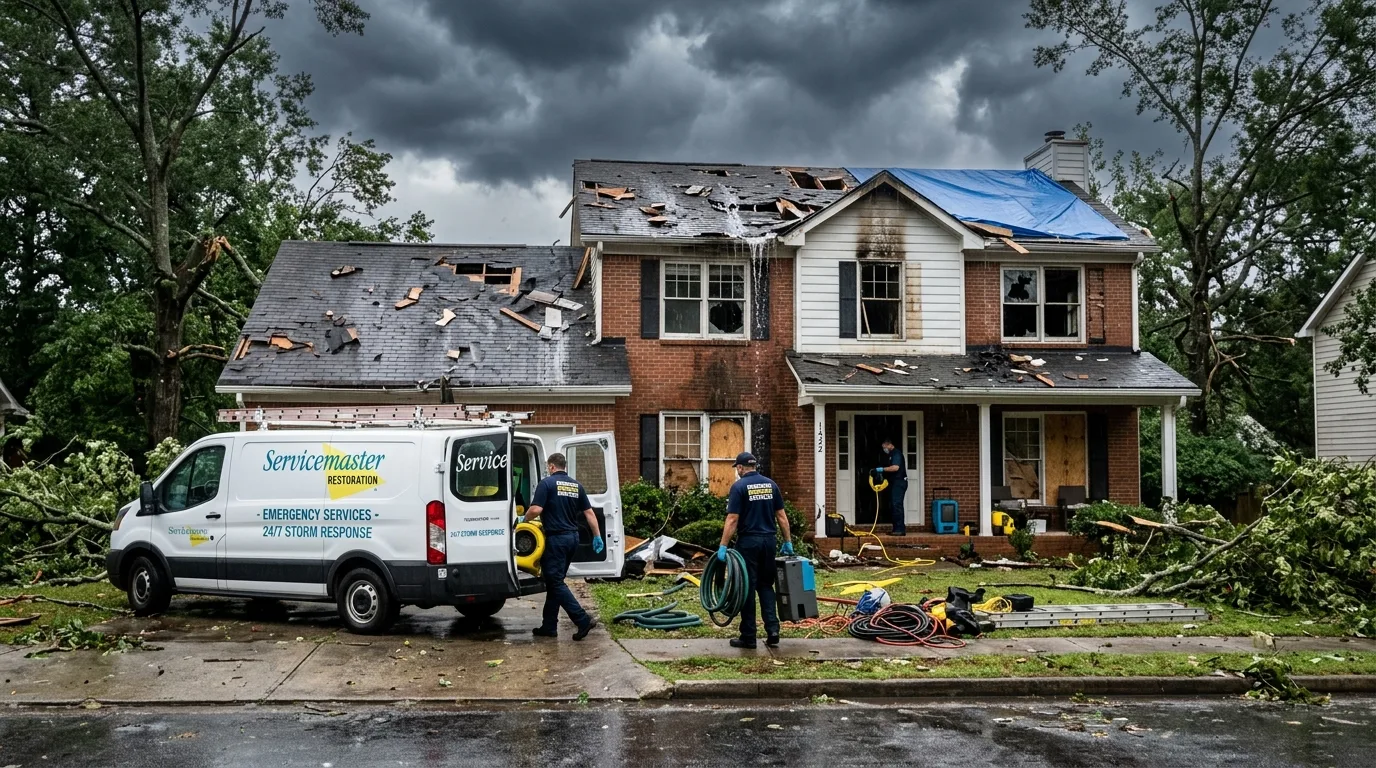
The decisions made in the first two hours after a flood in Peachtree Corners determine both how safe you’ll be and how much the restoration will cost. Most homeowners know they need to call someone — but they’re not sure who, in what order, and what to do in the meantime. In this post, we cover the exact sequence of actions for the first hours after a flood, with specific guidance for Peachtree Corners homes and the conditions that make this area’s flood events different from the national averages.
Flood in Your Peachtree Corners Home Right Now?
Stop reading and call (877) 698-1311 — our 24/7 emergency water extraction team will be there in 60 minutes.
Before Anything Else: Safety First
Do not enter a flooded room or structure until you have confirmed two things: (1) the water source has been stopped or is known to be safe (rainwater, clean supply line), and (2) no electrical hazards are present. Standing water in contact with electrical outlets, appliances, or submerged wiring is a life-threatening electrocution risk. If you cannot confirm power has been cut to the affected area, do not enter. Go to your electrical panel and shut off breakers to any circuits serving affected rooms before entering.
Category 3 black water — sewage overflow, river water, storm drainage intrusion — requires additional precautions. Do not allow direct skin or mucous membrane contact. If you must enter a black water area before professional help arrives, wear rubber boots and gloves at minimum. Keep children and pets out of any area that has contacted Category 3 water. Flood damage cleanup for Category 3 events requires full PPE for a reason.
Step 1: Stop the Water Source
If the flood source is internal — a burst pipe, failed appliance, or running fixture — shut off the water supply immediately. For a single appliance, use the supply shutoff valve at the wall. For a burst pipe in a wall, shut off the main water supply at the meter or main shutoff. Know the location of your main shutoff before an emergency: in Peachtree Corners homes, it is typically near the water meter at the street or at a main shutoff valve inside the garage or utility area.
If the source is external — storm flooding through foundation cracks, window wells, or drainage overflow — you cannot stop the source, but you can stop additional water from entering. Move rugs, furniture, and electronics from the path of incoming water. Use towels or sandbags at door thresholds if water is entering from outside. If any part of the exterior drainage path can be temporarily redirected with a sandbag or berm, do it.
Step 2: Shut Off Power to Affected Rooms
Go to your breaker panel and turn off circuits serving any rooms with standing water. If the panel itself is in an affected area or you cannot safely reach it, call your utility company (Georgia Power for most Gwinnett County homes) for emergency disconnect. Do not attempt to operate switches, receptacles, or appliances in rooms with standing water — even after the water appears to have receded, wiring and insulation in walls may still be saturated and present shock risk.
Step 3: Document Before Extraction Starts
Once safety is confirmed, document everything before calling for water extraction. Take video and photos of every affected room from multiple angles. Photograph flooring, wall staining, damaged contents, and the water source if identifiable. This documentation is the foundation of your insurance claim — it shows the pre-extraction condition that the adjuster needs to assess the scope of loss. Do not discard any damaged materials before an adjuster has approved it.
For homeowners near Simpsonwood Park or along the river-adjacent areas of Peachtree Corners who experience storm flooding, photograph the water entry point and any visible high-water mark lines on walls or doors. These marks are evidence of flood depth and duration that insurance documentation needs.
Step 4: Call for 24/7 Emergency Water Extraction
Call a professional water extraction company immediately after documenting. Do not wait for the storm to stop, for business hours, or for the water to “dry on its own.” Every hour of standing water in a Peachtree Corners home increases the cost of restoration and the risk of mold growth. In summer conditions, mold can begin colonizing wet materials within 24 hours — structural drying must begin as soon as extraction is complete to prevent it.
Emergency water extraction teams in Peachtree Corners typically stage equipment via Peachtree Industrial Boulevard and can reach most Gwinnett County residential addresses within 25–40 minutes of dispatch. When you call, be prepared to provide: your address, the apparent source of flooding, an estimate of how many rooms are affected, and whether there is any sewage odor (which affects the protocols required).
Emergency Flood Response in Peachtree Corners, GA
Call (877) 698-1311 now — IICRC-certified extraction team on-site in 60 minutes across Gwinnett County.
Step 5: Initiate Your Insurance Claim
Call your insurance company’s claims line as soon as the immediate emergency is addressed. Initiating the claim early means an adjuster is assigned sooner, and most policies require prompt notification as a condition of coverage. You will receive a claim number immediately — record it with the date, time, and representative name. Provide a description of the event, the apparent source, and confirm that you have already called for professional mitigation.
For water damage claims in Gwinnett County, the insurance company will typically assign an independent adjuster within 1–3 days. You do not need to wait for the adjuster before mitigation begins — virtually all policies require prompt mitigation to limit damage, and a restoration company can coordinate directly with your adjuster once assigned.
Step 6: Contact Your Restoration Company About Insurance Coordination
A professional water damage restoration company in Peachtree Corners should handle insurance coordination from the first contact. They produce the documentation your adjuster needs — moisture maps, photo logs, material inventories, and scoped estimates — as a standard part of every project. Ask specifically: “Do you provide documentation for insurance claims?” and “Do you communicate directly with adjusters?” If the answer is no, that is a significant flag.
What to Avoid in the First Hours After a Flood
- Do not use a shop vac for significant flooding: Consumer-grade vacuums are inadequate for water damage extraction and do not dry building materials
- Do not run the HVAC system: If water has entered ductwork, running the system spreads moisture and potentially mold throughout the house
- Do not discard materials before documentation: Everything damaged is part of your claim record
- Do not use electricity in wet areas: Even if the power appears to be off, verify at the panel before entering
- Do not delay calling for extraction: Every hour of standing water increases scope and cost
Frequently Asked Questions
How long can water sit before permanent damage occurs in a Peachtree Corners home?
Flooring damage begins within hours: hardwood buckling and laminate delamination often begin within 24 hours. Drywall begins to soften and lose structural integrity within 24–48 hours. Mold colonization begins within 24 hours in warm, humid conditions — which describes Peachtree Corners for most of the year. Insurance adjuster timelines aside, the practical answer is: get extraction started within hours, not days.
Can I dry out flood damage myself in Peachtree Corners?
For very small events — a few gallons of clean water from a known source, contained to a hard-surface floor — homeowners can manage the initial response. For any event involving more than a few gallons, carpet or flooring affected, wall cavities potentially saturated, or any sewage component, professional extraction and structural drying is required. The distinction is that professional drying must reduce moisture in structural components to target moisture content — not just make surfaces feel dry.
What if I can’t reach my insurance company immediately after a flood?
Begin mitigation immediately — most policies require it, and your coverage may be at risk if you wait for insurer contact before addressing an ongoing emergency. Document everything before extraction starts. Contact your insurance company at the earliest business hours opportunity, or use their emergency claims line if available. Your restoration company can often help coordinate with insurers and advise on documentation requirements.
Flood Response Checklist Complete — Now Call the Experts
Peachtree Corners Water Damage Restoration: 24/7 emergency response, IICRC certified, all insurance carriers. Call (877) 698-1311.
Related: