Commercial Water Damage in Technology Park: A Guide for Peachtree Corners Businesses
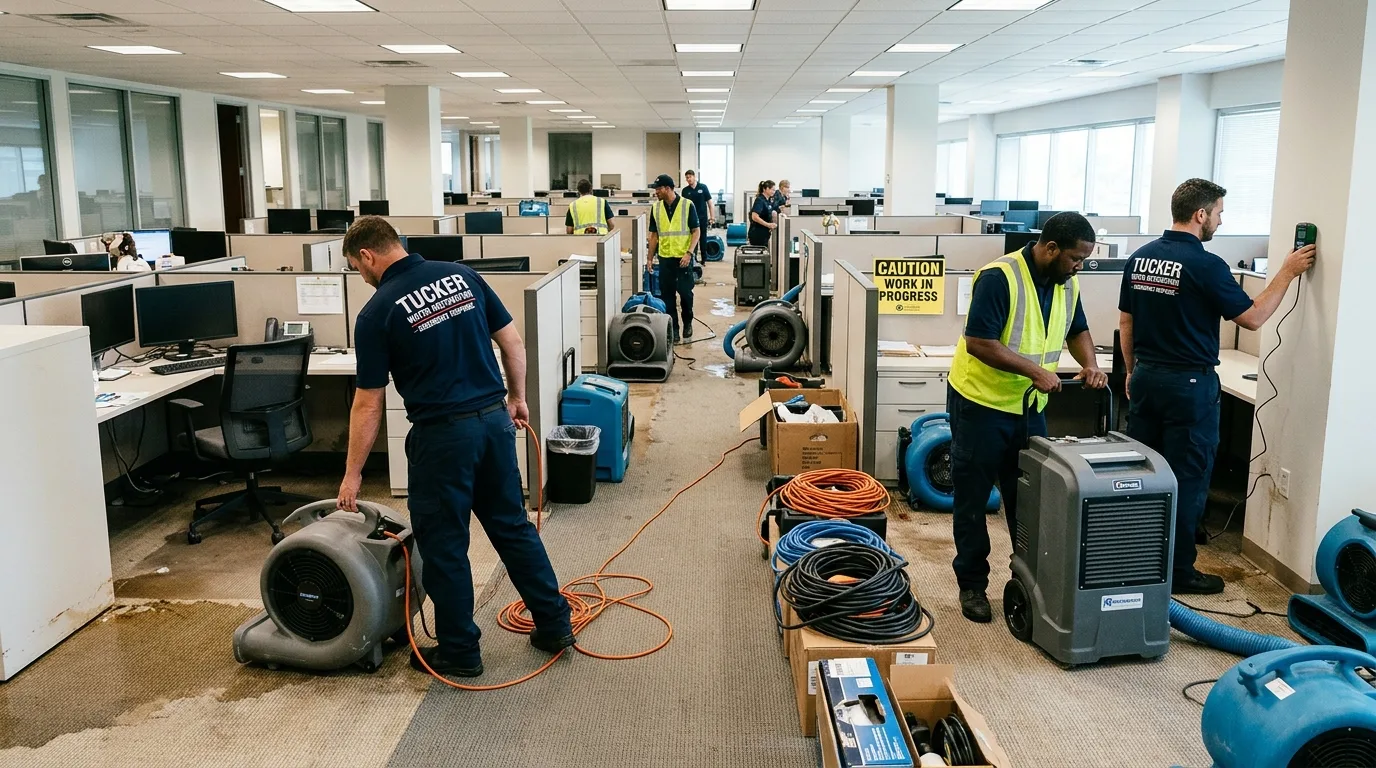
When water damage occurs in a commercial space at Technology Park or the Curiosity Lab corridor in Peachtree Corners, the stakes are different from a residential event. Operational downtime, equipment loss, tenant obligations, and commercial insurance requirements all add complexity that a residential-focused restoration company may not be equipped to handle. In this post, we cover what commercial water damage looks like in Technology Park’s mixed-use environment, what response protocols differ from residential, and what Peachtree Corners business owners need to know before a water event occurs.
Commercial Water Damage in Peachtree Corners, GA?
24/7 emergency water extraction for Technology Park and all commercial properties across Gwinnett County. Call (877) 698-1311.
Why Technology Park and Curiosity Lab Businesses Face Specific Water Damage Risks
Technology Park/Curiosity Lab is one of Peachtree Corners’ defining features — a 500-acre technology and innovation campus that houses corporate offices, R&D facilities, startups, and the city’s autonomous vehicle testing track. The mixed-use nature of the development — combining older office park infrastructure with newer tenant improvements and specialized equipment — creates several water damage risk factors that don’t apply to standard residential properties.
Aging building infrastructure: Many of the older commercial buildings in Technology Park were developed in the 1980s and early 1990s, when Peachtree Corners established itself as a technology employment hub. The plumbing, HVAC systems, and roof assemblies in these older structures are now 30–40 years old — an age at which maintenance-deferred failures become common. Water supply lines, cooling system connections, and roof drainage systems all represent failure points that can release significant water volumes into commercial spaces.
Tenant improvement variability: Commercial spaces in the Technology Park area have often been built out multiple times by successive tenants, creating complex mechanical, electrical, and plumbing configurations that aren’t always reflected in current building records. Water extraction after a flooding event must account for this variability — specialized equipment and materials in tenant spaces may require different handling than standard commercial buildout.
Server and electronics risk: Technology-focused businesses typically have significant IT infrastructure investment — servers, networking equipment, testing hardware. Water damage in the presence of sensitive electronics creates both immediate equipment loss risk and electromagnetic and corrosion damage that may not be immediately apparent. Commercial water damage response for technology businesses must prioritize rapid extraction to minimize electronics exposure time.
How Commercial Water Damage Response Differs from Residential
Scale of equipment: Commercial spaces typically require more drying equipment than residential properties of similar square footage because commercial construction — concrete slab floors, metal stud framing, drop ceilings — holds moisture differently and often has larger continuous spaces that require more air mover coverage.
Business hours coordination: Commercial water damage restoration involves coordinating with building management, tenants, and potentially multiple businesses in adjacent spaces. Emergency extraction can begin 24/7, but subsequent drying phases must be coordinated to minimize operational disruption — equipment placement, noise levels, and access all require planning that residential projects don’t.
Commercial insurance requirements: Commercial property insurance policies have different documentation requirements than residential homeowners’ policies. Business interruption coverage, which compensates for lost revenue during the restoration period, requires detailed scope-of-work documentation and timeline projections. Commercial policies typically require earlier notification than residential policies — review your policy terms before an event occurs.
Contents handling for specialized equipment: Technology businesses in Peachtree Corners’ park often have specialized equipment — testing hardware, server infrastructure, manufacturing tools — that requires separate assessment and handling documentation beyond standard contents inventory. If business contents are insured under a separate commercial inland marine or equipment policy, that policy may have specific documentation requirements.
Commercial Water Damage Response in Peachtree Corners
IICRC-certified commercial restoration for Technology Park and Gwinnett County businesses. Call (877) 698-1311 for 24/7 emergency response.
The Most Common Commercial Water Damage Events in Technology Park
HVAC system failures: Commercial HVAC systems — rooftop units, split systems, and chilled water systems — represent a significant water damage risk in commercial buildings. Condensate drain pan overflows are the most common commercial water damage source in office environments, and in Technology Park’s climate (Gwinnett County averages 52+ inches of annual rainfall with high summer humidity), condensate volumes are substantial during peak cooling season.
Roof drainage failures: Flat and low-slope roofs common in commercial construction depend on interior roof drains and scuppers for drainage. When these become blocked by debris, standing water (ponding) on the roof creates hydrostatic pressure that can overwhelm the roof membrane and enter the building. Commercial buildings in Technology Park that were developed in the 1980s and 1990s with original roofing assemblies are at elevated risk for this failure mode.
Fire suppression system discharge: Wet-pipe fire suppression systems can discharge accidentally during maintenance, contractor work, or due to aging system components. A single sprinkler head discharge in a commercial space can release 15–25 gallons per minute — enough to flood a significant area in minutes. Post-discharge water extraction and drying is a commercial restoration specialty with specific documentation requirements for insurance claims.
Plumbing supply line failures: Supply lines in commercial spaces serve bathrooms, break rooms, HVAC equipment, and sometimes laboratory or manufacturing equipment. Failures in supply lines feeding second-floor spaces flow directly into the floor/ceiling assembly of the space below — a common pattern in multi-story commercial buildings that can affect two tenant spaces in a single event.
Business Continuity Considerations for Technology Park Tenants
Commercial water damage events create operational disruption risk that residential events don’t. For Technology Park businesses with contractual uptime obligations, research equipment, or client-facing facilities, minimizing operational downtime is as important as the physical restoration.
The restoration sequence that minimizes downtime: immediate emergency extraction to stop ongoing damage, rapid assessment of which systems and spaces must be operational immediately vs. can tolerate drying equipment, prioritized drying of critical operational areas, documentation for insurance claim and business interruption coverage, rebuild coordination to complete the project on a timeline that matches business operational needs.
Business interruption coverage in commercial policies compensates for lost revenue during the restoration period. Triggering this coverage requires documented proof of the restoration timeline and its operational impact — which is why documentation starting from the first call matters as much for commercial clients as residential.
Frequently Asked Questions
How long does commercial water damage restoration take in Technology Park?
Commercial restoration timelines depend on affected area, construction type, and business operational requirements. A single-space office flooding event in Technology Park typically takes 3–7 days for extraction and structural drying. Multi-tenant or multi-floor events take longer. We develop project timelines that account for business operational needs and coordinate drying schedules to minimize disruption to active business operations where possible.
Does commercial property insurance cover water damage from HVAC failures?
Most commercial property insurance covers sudden and accidental water damage from HVAC system failures — including condensate drain overflows and component failures. Damage from gradual leaks that the property manager should have caught and repaired may be disputed. Business interruption coverage for loss of revenue during restoration periods is a separate coverage line that must be specifically included in your policy. Contact your broker to confirm your specific coverage before an event.
How much does commercial water damage restoration cost in Peachtree Corners?
Commercial water damage restoration in Peachtree Corners typically costs $3.50–$7.50 per square foot for the remediation phase, depending on water category, plus materials and rebuild costs. Large commercial HVAC discharge events in multi-tenant spaces can range from $10,000 to $50,000+ depending on the affected footprint and build-out type. Contact us for an on-site assessment and commercial insurance documentation support.
Commercial Water Damage in Peachtree Corners — We Handle It All
From Technology Park offices to Gwinnett County commercial properties — 24/7 emergency water extraction, all insurance carriers. Call (877) 698-1311.
Related: