Peachtree Corners Spring Storm Season: Prepare Your Home Now
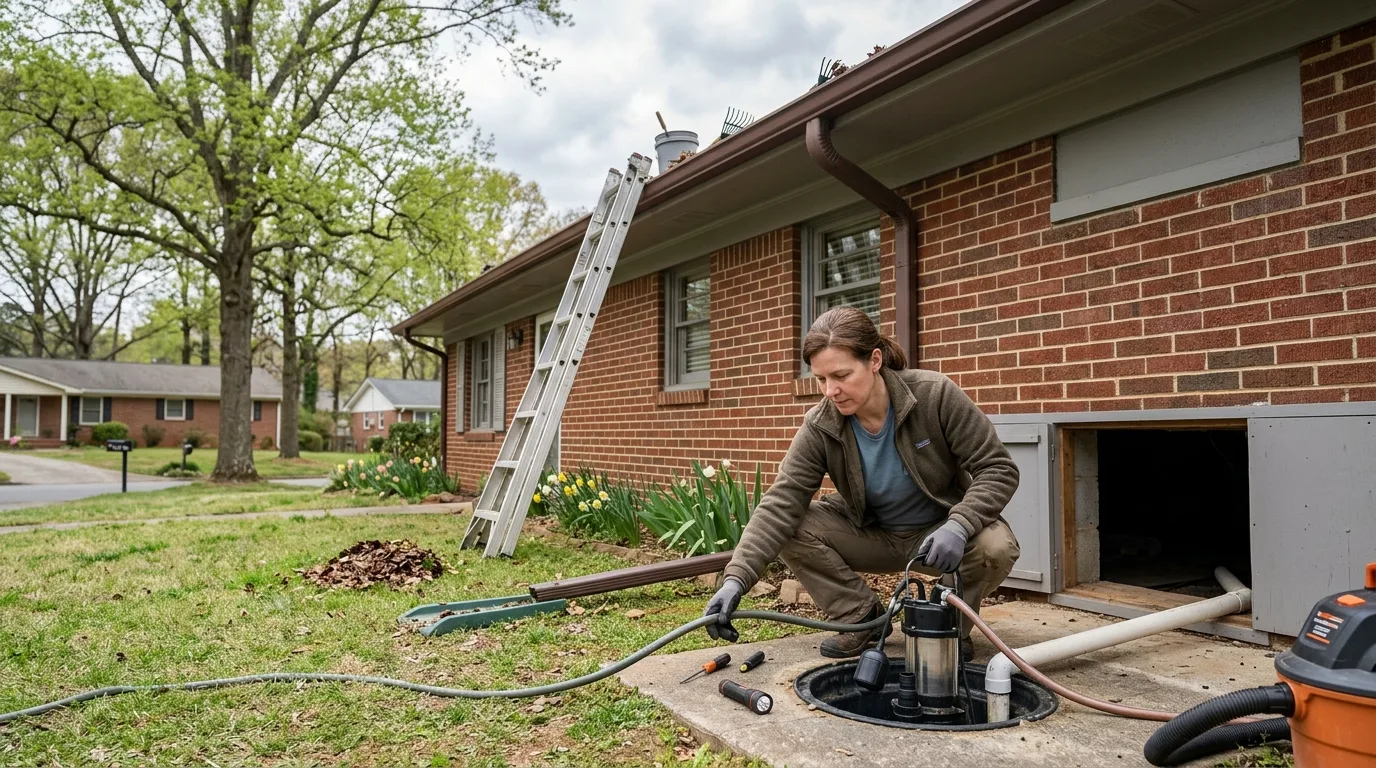
By February, Peachtree Corners has already received its average wettest month of rainfall — and the spring thunderstorm season is just beginning. Georgia’s transition from winter to spring brings the highest-volume rain events of the year, and homes that haven’t been prepared are the ones that generate emergency water extraction calls in April and May. In this post, we cover the five specific preparation steps that reduce flood damage risk for Peachtree Corners homeowners, and what to do if a storm catches you unprepared.
Storm Flooding in Peachtree Corners, GA?
24/7 emergency flood cleanup response across Gwinnett County. Call (877) 698-1311 for immediate dispatch.
Why Spring Storms Are Peachtree Corners’ Highest Water Damage Risk Season
Winter freeze-thaw events generate more individual pipe burst calls, but spring thunderstorms produce the highest-volume water damage events in Peachtree Corners. The Chattahoochee River corridor and Gwinnett County’s clay-heavy soils create a specific flooding pattern: when late February through May’s storm cells arrive — sometimes delivering 2–4 inches of rain in under an hour — the red clay soil becomes impermeable within the first inch of rainfall, converting most precipitation into surface runoff that flows toward lower elevations.
Properties throughout the Peachtree Station neighborhood and along Jones Bridge Road face this runoff from higher elevations to the east and north. The storm drainage infrastructure installed in the 1980s was sized for historical rainfall intensities that no longer reflect current storm frequency or volume. When drainage systems are overwhelmed, water backs up through foundation cracks, enters through below-grade window wells, and saturates crawl spaces within hours of a storm event starting.
Preparation Step 1: Clear All Drainage Paths Before March
Walk your property and identify every drainage path that carries water away from the foundation. Clear downspout extensions of debris and confirm they discharge at least 6 feet from the foundation wall — the most common drainage failure we see during spring water damage events in Gwinnett County homes is a downspout that deposits water against the foundation. Clean gutters of accumulated winter debris. Remove any accumulated soil or mulch that has built up against the foundation wall and created a slope that directs runoff toward rather than away from the structure.
If your property has a French drain or surface drain system, verify it is not blocked with sediment or root intrusion. For properties on sloped lots in areas like Amberfield, a blocked surface drain can route the entire slope’s runoff directly to the foundation during a significant storm event. Flood damage cleanup from a single spring storm event costs $2,000–$15,000 depending on category and scope — clearing drainage costs nothing.
Preparation Step 2: Inspect Your Roof and Attic Before Storm Season
A compromised roof is the most direct path for storm water to enter a Peachtree Corners home. Inspect shingles for lifting, cracking, or missing sections. Check flashing around chimneys, skylights, and roof-wall junctions — flashing failures are a common source of water intrusion that goes undetected until ceiling staining appears after a major storm. Check the attic for any signs of prior water intrusion: staining on sheathing, discoloration on roof boards, or musty odors that indicate prior mold colonization from undiscovered leaks.
Address any identified roof deficiencies before March. Roofers in the Gwinnett County area are typically less busy in February than in late spring and summer — scheduling early usually means faster service and better availability. Storm damage cleanup after a roof leak can involve structural drying of ceiling assemblies, insulation replacement, and mold remediation if moisture has been present for more than 48 hours.
Preparation Step 3: Check Your Crawl Space After Winter
Winter is the season when crawl space moisture problems develop in Peachtree Corners. Freeze-thaw cycling, January and February rainfall, and reduced evaporation from cool temperatures create conditions where crawl space moisture accumulates without any visible sign above the floor. Before storm season begins, inspect the crawl space for standing water, wet insulation, mold on framing members, and condensation on vapor barriers.
Crawl space flooding during spring storms is one of the most common water damage events we address in Gwinnett County. Homes on sloped lots throughout the Spalding Corners area experience lateral water intrusion through the foundation perimeter when the soil uphill becomes saturated. A dry inspection in February may look very different by April — but identifying existing moisture damage before storm season starts means you can address it before it becomes more extensive. Structural drying of a crawl space after a storm event is significantly less expensive when addressed promptly.
Preparation Step 4: Know Where Your Shutoffs Are
One of the highest-cost factors in water damage events is the time between when water starts flowing and when it stops. During a spring storm event that triggers a roof leak, pipe failure, or sump pump backup, homeowners who know where the main water shutoff and circuit breakers are can act in seconds rather than minutes. Every minute of active water flow in a Peachtree Corners home adds to the eventual water extraction, structural drying, and restoration cost.
Locate and test your main water shutoff valve before storm season. If it’s difficult to operate or won’t fully close, have it serviced — a shutoff valve that fails to close during an emergency is a significant liability. Similarly, verify that your sump pump (if installed) is operational: pour a bucket of water into the sump pit and confirm the pump activates. Spring is peak season for sump pump failures, and a failed pump during a significant rainfall event is a common cause of basement flooding in Gwinnett County homes.
Preparation Step 5: Review Your Insurance Coverage Before a Claim
Review your homeowners’ insurance policy before storm season to understand exactly what is covered. Standard policies in Georgia cover storm damage from a direct physical cause — a tree falling on the roof, wind damage opening an envelope breach. They typically do not cover surface flooding or storm water intrusion through drainage failures, which requires separate flood insurance. If you live in a low-lying area of Peachtree Corners near Jones Bridge Park or in properties along the Chattahoochee River corridor, flood insurance may be worth considering.
Verify whether your policy includes a sewage backup endorsement. Spring storm events in Gwinnett County regularly overwhelm municipal sewer systems, producing sewage backups through residential laterals — and most standard homeowners’ policies do not cover this without a specific endorsement. Adding it before a storm season is significantly less expensive than discovering you’re uninsured after a sewage cleanup event.
Storm Damage Response in Peachtree Corners and Gwinnett County
Call (877) 698-1311 for 24/7 emergency flood damage cleanup. IICRC certified. All insurance carriers accepted.
What to Do If a Spring Storm Causes Water Damage
Stop water from entering if any opening in the envelope can be addressed safely. Call for 24/7 emergency water extraction immediately — do not wait for the storm to end. Water extraction can begin even while rain continues if the entry point has been secured. Document everything before extraction starts: video and photos of every affected room, the entry point, and any visible damage.
Contact your insurance company to initiate the claim. Most Gwinnett County homeowners’ policies have 24/7 claims lines for emergencies. A professional restoration company that begins work promptly produces the documentation your adjuster needs from the first contact.
Frequently Asked Questions
What spring storms cause the most water damage in Peachtree Corners?
Slow-moving thunderstorm cells that produce 2+ inches of rain in a single hour are the highest-risk event type for Peachtree Corners. These events overwhelm drainage systems before runoff has time to move away from structures. The spring months of March, April, and May historically produce the most significant flooding calls in this area, though late summer tropical remnants can also deliver high-volume rainfall events.
Does standard homeowners’ insurance cover spring storm flooding in Gwinnett County?
Standard policies cover storm water damage from a direct physical breach — roof damage allowing water entry, for example. They do not cover surface flooding or water that enters through foundation cracks or inadequate drainage without a physical storm breach of the envelope. Separate flood insurance is required for surface flooding coverage. Contact your insurer to confirm your specific coverage before storm season.
How much does spring storm water damage cleanup cost in Peachtree Corners?
Spring storm water damage cleanup in Peachtree Corners typically ranges from $2,000 to $15,000 depending on the entry point, the category of water, and the affected area. Roof leaks with interior water damage typically cost $2,000–$6,000. Basement flooding events with significant standing water run $5,000–$15,000. Category 3 events involving sewage overflow during storm surcharge can reach higher depending on scope.
Prepare Now — Storm Season Is Coming
Call Peachtree Corners Water Damage Restoration at (877) 698-1311. 24/7 emergency response, IICRC certified, all insurance carriers accepted.
Related: