Understanding Water Damage Categories in Peachtree Corners, GA
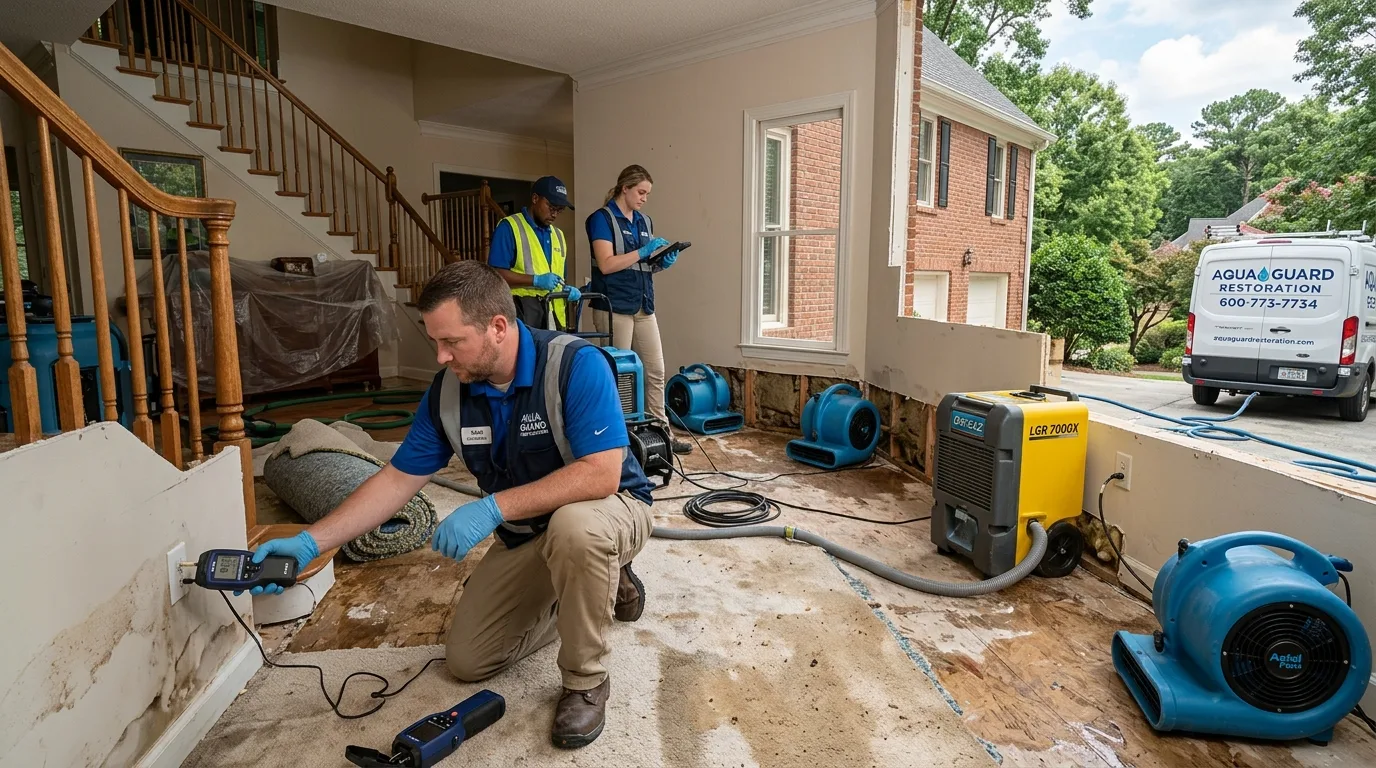
The single most important factor in how a water damage event is handled — and what it costs — is the category of water involved. Yet most Peachtree Corners homeowners don’t know what Category 1, 2, or 3 means until they’re mid-crisis and an IICRC technician is explaining why certain materials need to be removed rather than dried. In this post, we cover what each water damage category means, how categories can escalate, and why the distinction matters for your restoration timeline, cost, and insurance documentation.
Water Damage in Peachtree Corners? Get the Right Response.
Our IICRC-certified team classifies and responds to every water category — 24/7 across Gwinnett County. Call (877) 698-1311.
Why Water Category Determines Your Entire Restoration Response
The IICRC S500 standard — the industry governing document for water damage restoration — classifies water damage into three categories based on the level of contamination in the water. Category is not determined by where the water came from geographically, or by how “dirty” it looks. It is determined by what the water has contacted and for how long. This distinction is critical because Category 1, 2, and 3 events require fundamentally different cleanup protocols, different material treatment decisions, and different documentation for insurance claim assistance.
Category 1: Clean Water
Category 1 water originates from a sanitary source and presents no substantial harm to humans if contacted. Sources include: broken supply lines, failed water supply connections to appliances, overflow from sinks or bathtubs, and falling rainwater (before it contacts other surfaces or materials).
Category 1 is the most common water damage category in Peachtree Corners during winter freeze-thaw events when supply pipes burst. Clean water events cost approximately $3.50 per square foot to remediate — the lowest of the three categories. Materials can potentially be dried in place if extraction and drying begin promptly, reducing material removal costs.
Critical caveat: Category 1 water can escalate to Category 2 within 24–48 hours if not addressed, as it absorbs bacteria from building materials and begins to support microbial growth. In Peachtree Corners’ warm, humid climate, this escalation can happen faster than in drier regions. A burst pipe event that is not addressed within 24 hours may no longer be a Category 1 event by the time restoration begins.
Category 2: Gray Water
Category 2 water contains significant contamination and may cause discomfort or sickness if ingested. Sources include: dishwasher and washing machine overflow, toilet bowl overflow (without feces), failed sump pump water, and roof leak water that has contacted building materials. Category 2 water contains bacteria, surfactants, or biological agents at levels requiring more intensive treatment than clean water.
Gray water restoration costs approximately $5.25 per square foot and requires application of EPA-registered antimicrobial agents to all affected surfaces. Porous materials that have been saturated with Category 2 water are typically removed rather than dried in place, since drying them without antimicrobial treatment does not eliminate the microbial load — it just concentrates it. Documentation for insurance claim purposes must specify the water category; adjusters in Gwinnett County use this to verify the scope of material removal.
The most common Category 2 event in Peachtree Corners homes is appliance overflow — washing machines, dishwashers, and refrigerator ice maker line failures that release gray water onto flooring and into wall cavities adjacent to the appliance. HVAC condensate line failures are another common source, particularly during summer when condensate volume is highest.
Category 3: Black Water
Category 3 water is grossly contaminated and can contain pathogenic agents, toxigenic agents, or other harmful bacteria or biological agents. Sources include: sewage overflow, river water flooding, storm drainage overflow, and any Category 1 or 2 water that has been standing for more than 72 hours.
Black water restoration is the most intensive and expensive category at approximately $7.50 per square foot plus the full cost of replacing all contacted porous materials. Per IICRC S500 protocol, there is no drying-in-place option for Category 3 events — all contacted drywall, insulation, carpet, pad, and wood flooring must be removed regardless of apparent saturation level. This is a health requirement, not a cost-maximization strategy: the pathogenic load in sewage or river water cannot be rendered safe by drying.
In Peachtree Corners, Category 3 events occur primarily from sewage backups (more common in the Forum area and other established neighborhoods with aging sewer infrastructure), storm flooding events where storm drainage overflow introduces Category 3 water through foundation penetrations, and any long-neglected water damage event where Category 1 or 2 water has sat beyond 72 hours.
Not Sure What Category Your Water Damage Is?
Our IICRC-certified team assesses and classifies every water event in Peachtree Corners. Free assessment — call (877) 698-1311.
How Categories Escalate and Why Timing Matters
Category escalation is one of the most important — and least understood — aspects of water damage for Gwinnett County homeowners. The IICRC defines clear escalation rules:
- Category 1 → Category 2: After 24–48 hours of contact with building materials, clean water typically escalates to gray water as it absorbs bacterial content from surfaces
- Category 2 → Category 3: After 72 hours, gray water escalates to black water
- Storm or sewage contact: Any water that has contacted outdoor soil, storm drainage, or sewage is immediately Category 3 regardless of its source
This escalation means that a Category 1 burst pipe event that is not addressed for 48 hours may require Category 2 protocols — adding antimicrobial treatment costs and potentially requiring material removal that would not have been necessary with prompt response. Peachtree Corners’ high summer humidity accelerates this process because bacterial activity is temperature-dependent; warm, humid conditions produce faster category escalation than cool, dry conditions.
What Category Means for Your Insurance Claim in Gwinnett County
Insurance documentation for water damage claims in Gwinnett County includes the water category as a standard line item. Adjusters use the category to verify that the scope of work — particularly material removal — was appropriate and not excessive. A properly documented Category 3 claim will show full material removal from all contacted areas, which is required by protocol. A Category 1 claim with extensive material removal that lacks documentation explaining why drying-in-place was not feasible may face scrutiny.
Our IICRC-certified technicians document category classification at the time of arrival, using visual inspection, odor assessment, and knowledge of the water source. If category escalation has occurred, it is noted in the report with the estimated duration. This documentation protects both the homeowner and the restoration company during the claims process.
Frequently Asked Questions
How do I know what category my water damage is in Peachtree Corners?
Category is determined by the water source and duration, not by appearance. Ask yourself: Where did the water come from? A supply line break is Category 1; a toilet tank overflow is Category 2; a sewage backup or storm drainage intrusion is Category 3. If you’re unsure — or if you don’t know how long the water has been present — call for a professional assessment. Misclassifying category down (treating Category 2 as Category 1) can result in inadequate remediation that leads to mold growth.
Does water damage category affect how much my insurance pays in Gwinnett County?
Yes, indirectly. Category determines what protocols are required and therefore what the legitimate scope of work is. Higher categories have higher per-square-foot costs and require more material removal. If your claim documentation accurately reflects the category and the IICRC-required scope for that category, the insurance adjustment should reflect those costs. Misclassified or undocumented category determination is a common source of claim disputes in Gwinnett County.
Can water damage category change during restoration?
Yes. If monitoring during restoration reveals that moisture levels are not declining as expected — indicating the water has penetrated more deeply or additional sources are present — the restoration scope may need to be expanded. We document any scope changes with moisture readings and photos to ensure the insurance claim reflects the actual work required.
IICRC-Certified Water Damage Response for Every Category
Peachtree Corners Water Damage Restoration handles Category 1, 2, and 3 events. Call (877) 698-1311 for 24/7 response across Gwinnett County.
Related: